Colorectal Cancer Awareness: Screening & Prevention at BVCHD
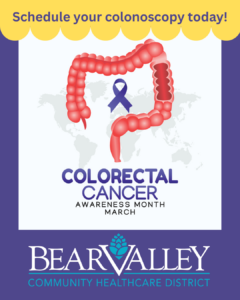
March is Colorectal Cancer Awareness Month, and we’ve put together some facts that could save your life. Colorectal cancer is now the third most common cancer among both men and women in the United States. But here’s the kicker: it’s also the leading cause of cancer deaths in those under 50 years old. This means it’s not just common, it’s commonly going undetected until it’s too late. At BVCHD, we want to change that.
First up, what is colorectal cancer? Colon cancer, rectal cancer, or a mix of both? In the simplest terms, colorectal cancer is caused by cells in the rectum or colon (large intestine) growing out of control. Colon cancer and rectal cancer are often grouped together under the umbrella of colorectal cancer but are named differently depending where in the intestine they start.
What are Some Common Risk Factors for Colorectal Cancer?
Here’s the good news: some 54% of colorectal cancer diagnoses are linked to risk factors that are avoidable. They include things like:
- Carrying extra body weight
- A sedentary lifestyle
- Smoking
- Alcohol consumption
- High consumption of red or processed meats with low consumption of fresh fruits, vegetables and whole grains
Other risk factors include:
- Age
- Personal history or family history of colorectal polyps
- Inflammatory bowel disease
- Type 2 diabetes
- Race and ethnicity (For instance African Americans are some 20% more likely to develop colorectal cancer and also some 40% more likely to die from it, according to the American Cancer Society.)
Schedule your colonoscopy now by calling BVCHD at 909-878-8246. Our surgical services team can perform the procedure right here in Big Bear Valley to ensure your optimal comfort throughout the process.
Colorectal Cancer: Signs & Symptoms
Unfortunately, colon cancer frequently goes unnoticed. While there are some common signs, the most common symptom is often no symptom at all. What’s more, the symptoms that do exist are often either missed or misattributed to another issue. Some of these symptoms include:
- Bleeding from the rectum (often mistaken for hemorrhoids)
- Blood in the stool (often goes unnoticed or mistaken for hemorrhoids)
- A change in bowel habits (often attributed to a change in food or drink habits)
- A loss of appetite (might be attributed to a tummy bug or illness)
- Losing weight when you aren’t trying to (might be attributed to loss of appetite above)
- Weakness or fatigue (too common of a symptom to pinpoint)
Colon Cancer & Rectal Cancer Prevention
The best way to prevent colon cancer is to catch it before it begins. In 2021, the U.S. Preventative Task Force revised its colonoscopy recommendation from beginning at age 50 to age 45. That means it is recommended that you begin screening for colorectal cancer at age 45, but sooner if you have a family history of the disease. Colon cancer, when found early, is highly treatable. Likewise, early colonoscopies ensure that polyps that have begun to grow in the colon are removed before they develop into full-fledged cancer.
Another preventative option, the at-home stool test Cologuard, is considered a second-best alternative to the colonoscopy. Though convenient and less invasive (therefore, often chosen by those who wish to avoid anesthesia or colonoscopy “prep”) a colonoscopy is still considered the more reliable test for colorectal cancer prevention. Colonoscopies allow doctors to detect and remove polyps, as well as biopsy pre-cancerous tissue long before symptoms occur. Cologuard, on the other hand, tests only for blood and altered DNA in the stool.
Outside of regular screening, the following can reduce one’s risk for developing colorectal cancer:
- Maintaining a healthy weight
- Avoiding alcohol consumption (limit to 1 drink per day for women and 2 for men)
- Avoiding tobacco products
- Staying physically active
If you are age 45 or over, it’s important to schedule your colonoscopy and begin regular screenings. Those with “normal” results will need to continue testing every 10 years, while those with polyps or other abnormal results may need to re-screen every one to three years. Schedule your colonoscopy now by calling BVCHD at 909-878-8246.
Important Colorectal Cancer Resources from the American Cancer Society
Check out the following resources about colorectal cancer from the American Cancer Society:
7 Things to Know About Getting a Colonoscopy
Colorectal Cancer Fact Sheet for Patients and Caregivers