Bear Valley Community Healthcare District is an official ICEMA stroke reviving center and a TeleStroke provider in partnership with Riverside Community Hospital. In highly critical instances, BVCHD will transfer patients to Riverside Community Hospital for in-person care.
A stroke can happen suddenly and without warning, changing a life in a matter of minutes. According to the Centers for Disease Control and Prevention (CDC), stroke remains a leading cause of death and serious disability in the United States. Yet many strokes are preventable, and recognizing the signs quickly can make the difference between recovery and long-term disability.
What Is a Stroke?
A stroke occurs when blood flow to part of the brain is interrupted. This can happen when a blood clot blocks a blood vessel (ischemic stroke) or when a blood vessel ruptures and causes bleeding in the brain (hemorrhagic stroke). Without oxygen-rich blood, brain cells begin to die within minutes. Rapid treatment can significantly reduce the risk of permanent disability and improve recovery outcomes.
Recognizing the Signs of Stroke
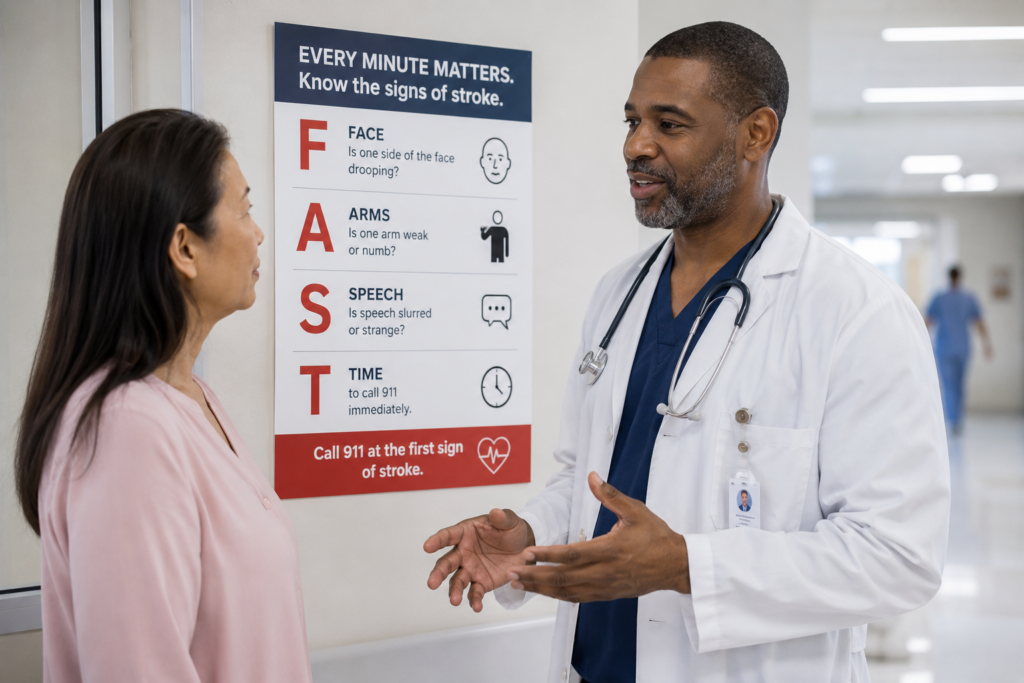
One of the most important parts of stroke awareness is learning how to recognize symptoms immediately. The CDC and the American Stroke Association encourage the public to remember the acronym F.A.S.T.
- F – Face drooping: One side of the face may droop or feel numb.
- A – Arm weakness: One arm may become weak or numb.
- S – Speech difficulty: Speech may sound slurred or difficult to understand.
- T – Time to call 911: If any of these symptoms appear, call emergency services immediately.
Additional stroke symptoms may include:
- Sudden confusion
- Difficulty understanding speech
- Sudden trouble seeing in one or both eyes
- Loss of balance or coordination
- Severe headache with no known cause
- Sudden dizziness or difficulty walking
These symptoms often appear suddenly. Even if symptoms go away quickly, they should never be ignored. A transient ischemic attack (TIA), sometimes called a “mini-stroke,” can be an early warning sign of a future stroke.
Why Immediate Treatment Matters
When it comes to stroke, “time is brain.” The faster a person receives medical treatment, the greater the chance of preserving brain function and reducing long-term damage.
Some clot-busting medications and advanced procedures are only effective if administered within a limited time window after symptoms begin. That is why calling 911 immediately is critical. Driving yourself to the hospital or waiting to “see if symptoms improve” can delay life-saving treatment.
Understanding Stroke Risk Factors
Stroke can affect anyone, but certain medical conditions and lifestyle habits can significantly increase risk. Some risk factors cannot be changed, including:
- Age
- Family history
- Race and ethnicity
- Previous stroke or TIA
However, many stroke risk factors are controllable. The American Stroke Association notes that high blood pressure is the leading risk factor for stroke. Other controllable risk factors include:
- Smoking or vaping
- Diabetes
- High cholesterol
- Obesity
- Physical inactivity
- Excessive alcohol consumption
- Atrial fibrillation (AFib)
- Poor diet
- Sleep apnea
Managing these conditions with the help of a healthcare provider can significantly lower stroke risk. If you have experienced a stroke or TIA in the past, following your care plan carefully is essential because the risk of another stroke may be higher.
Steps You Can Take to Help Prevent Stroke
While not every stroke can be prevented, healthy lifestyle choices can dramatically reduce your risk.
- Monitor and Control Blood Pressure: High blood pressure damages blood vessels over time and is one of the most significant contributors to stroke. Regular blood pressure screenings are essential, especially for adults over 40 or those with a family history of cardiovascular disease.
- Stay Physically Active: Regular physical activity supports heart health, circulation, weight management, and blood pressure control. Experts recommend at least: 150 minutes of moderate aerobic activity each week or75 minutes of vigorous exercise weekly. Activities such as walking, swimming, cycling, yoga, and strength training can all support cardiovascular health.
- Eat a Heart-Healthy Diet: A diet rich in fruits, vegetables, whole grains, lean proteins, and healthy fats can help reduce stroke risk. Many healthcare organizations recommend a Mediterranean-style diet that limits processed foods, excess sodium, and saturated fats.
- Quit Smoking: Smoking damages blood vessels, raises blood pressure, and increases clot formation. Quitting smoking is one of the most powerful ways to reduce stroke and heart disease risk.
- Manage Diabetes and Cholesterol: High blood sugar and elevated cholesterol both contribute to blood vessel damage and plaque buildup. Routine screenings and medication management, when necessary, can help reduce complications.
- Limit Alcohol Consumption: Excessive alcohol intake can raise blood pressure and increase stroke risk.
- Prioritize Sleep and Stress Management: Sleep apnea and chronic stress may also contribute to stroke risk. Good sleep hygiene, stress reduction techniques, and regular medical evaluations can support overall cardiovascular health.
Stroke Can Happen at Any Age
Although stroke risk increases with age, strokes are not limited to older adults. Younger adults are also experiencing strokes, often linked to uncontrolled blood pressure, smoking, obesity, diabetes, and other health conditions.
Final Thoughts
Stroke awareness saves lives. Knowing the warning signs, acting quickly during an emergency, and taking steps to manage your health can significantly reduce the risk of stroke and improve outcomes when one occurs.
Remember: stroke symptoms should never be ignored. If you notice signs of stroke in yourself or someone else, call 911 immediately. Fast action can protect the brain, preserve independence, and save lives.
Download our informational flyer about stroke awareness and prevention here.
Frequently Asked Questions About Strokes
What are the warning signs of a stroke?
The most common warning signs of stroke can be remembered with the acronym F.A.S.T.: face drooping, arm weakness, speech difficulty, and time to call 911. Additional symptoms may include sudden confusion, dizziness, trouble walking, vision changes, severe headache, or loss of coordination. Stroke symptoms often appear suddenly and should never be ignored, even if they go away quickly.
What should I do if someone is having a stroke?
If you think someone may be having a stroke, call 911 immediately. Do not wait to see if symptoms improve or attempt to drive yourself to the hospital. Rapid treatment is critical because some stroke therapies are only effective within a limited time window. Fast medical care can reduce brain damage, improve recovery, and potentially save a life.
Can stroke happen to younger adults?
Yes. Although stroke risk increases with age, strokes can happen at any age. Younger adults are increasingly experiencing strokes due to factors such as high blood pressure, smoking, obesity, diabetes, high cholesterol, and lack of physical activity. Knowing the warning signs and managing health risks early can help reduce the likelihood of stroke later in life.
What are the biggest risk factors for stroke?
High blood pressure is one of the leading risk factors for stroke. Other common risk factors include smoking, diabetes, high cholesterol, obesity, atrial fibrillation (AFib), physical inactivity, sleep apnea, excessive alcohol use, and poor diet. Some factors, such as age and family history, cannot be controlled, but healthy lifestyle changes and regular medical care can significantly lower stroke risk.
How can I help prevent a stroke?
You can lower your stroke risk by controlling blood pressure, staying physically active, eating a heart-healthy diet, managing diabetes and cholesterol, avoiding smoking or vaping, limiting alcohol, and maintaining a healthy weight. Regular medical checkups and screenings are also important. Early management of risk factors can help protect brain and heart health over time.